Buying Bitcoin is exciting for everyone, especially when you see its value increase. But have you ever thought about what happens if someone gets access to your wallet? You can loss your digital currency.
It is a common question of many cryptocurrency owners. They spend time comparing coins, checking market prices, and following investment trends, but not pay attention to where their digital money is stored.
A cryptocurrency wallet is not just an application for checking your balance. It is the tool that helps you manage access to your digital assets. Choosing the wrong storage method or ignoring basic security can put your funds at risk. Today we are discuss about. How wallets and cold wallets.
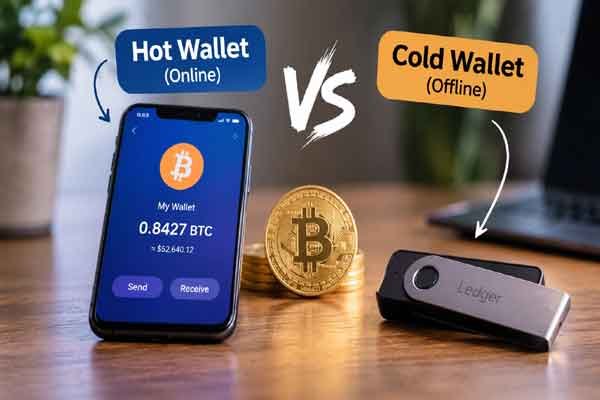
There are two common ways to store cryptocurrency: hot wallets and cold wallets. Both have their own uses. One makes daily transactions easier, while the other offers better protection against many online threats.
But does that mean a cold wallet is always better option? Let’s look at how these wallets work and what you should consider before choosing one.
What is a Hot Wallet?
Think about how you use a banking application. You open it on your phone, check your balance, and make payments whenever required. A hot wallet offers a similar level of convenience, but it is designed for cryptocurrency.
A hot wallet is a digital wallet that operates on an internet-connected device. It can be installed on a smartphone, computer, or web browser. Some cryptocurrency platforms also provide wallet services through their websites.
One reason people prefer hot wallets is that they do not need hardware. After setting up a wallet, users can send, receive, and manage supported cryptocurrencies from their devices.
For someone who regularly trades Bitcoin or uses decentralized applications, this easy access can be useful.
How Does a Hot Wallet Work?
When you create a hot wallet, it generates password that allow you to authorize transactions. You may also receive a recovery phrase, which can help restore access if you lose your device.
Whenever you send cryptocurrency, the wallet uses your private key to authorize the transaction. The transaction is then broadcast to the relevant blockchain network.
The important thing to understand is that your cryptocurrency is not physically stored inside your phone. Your wallet manages the keys that give you control over your digital assets.
Popular software wallets include MetaMask, Trust Wallet, and Exodus.
Advantages of Hot Wallets
Hot wallets are popular because they make cryptocurrency easier to use. Some of their main benefits include:
- Quick access: You can check your wallet and manage transactions using your phone or computer.
- No expensive hardware: Many software wallets are free to download.
- Easy to use: Most have simple interfaces that beginners can understand.
- Convenient trading: You can connect with supported exchanges and decentralized applications.
- Easy transfers: Sending and receiving cryptocurrency usually takes only a few steps.
Disadvantages of Hot Wallets
The same internet connection that makes hot wallets convenient can also create security problems.
For example, a person may unknowingly install a fake wallet application or visit a phishing website. If they reveal their recovery phrase or approve a malicious transaction, their cryptocurrency could be stolen.
Other risks include:
- Exposure to malware and viruses.
- Fake websites designed to collect wallet information.
- Malicious browser extensions.
- Compromised phones or computers.
- Accidental approval of unwanted transactions.
This does not mean hot wallets are unsafe for everyone. It simply means users need to be careful about where they connect their wallets and which transactions they approve.
What Is a Cold Wallet?
Now consider a different situation. You have purchased Bitcoin and do not plan to sell it anytime soon. You rarely make transactions, so keeping your private keys connected to an everyday device may not be necessary.
This is where cold wallets become useful.
A cold wallet stores cryptocurrency private keys offline, keeping them away from ordinary internet-connected environments. Hardware wallets are one of the most common ways to achieve this.
These devices are usually small enough to carry in your pocket. They are designed to protect private keys and allow users to approve transactions without exposing those keys to a connected computer.
Popular hardware wallet brands include Ledger and Trezor.
How Does a Cold Wallet Work?
A hardware wallet keeps your private keys inside the device. When you want to send cryptocurrency, you prepare the transaction using compatible software.
The transaction is then sent to the hardware wallet for approval. You check the details on the device and authorize it. The wallet signs the transaction internally without revealing the private keys.
The signed transaction can then be broadcast to the blockchain through the connected computer or phone.
This extra separation is important. Even if your computer has certain types of malware, the private keys are designed to remain protected inside the hardware wallet.
Advantages of Cold Wallets
Cold wallets are especially useful for people who want to hold cryptocurrency for longer periods.
Here are some reasons people choose them:
- Offline key protection: Private keys are kept away from ordinary online environments.
- Better long-term storage: They are useful for people who do not make frequent transactions.
- Transaction approval: You can review and approve transactions on the physical device.
- Reduced online exposure: Many common internet-based attacks become harder to carry out.
- Greater control: With self-custody, you manage your own cryptocurrency rather than depending entirely on an exchange.
Disadvantages of Cold Wallets
Cold wallets also require some responsibility. Unlike a mobile application, you cannot simply open your phone and complete every transaction.
There are a few things to consider:
- Hardware wallets usually have an upfront purchase cost.
- Losing the device can be inconvenient.
- A damaged device may require wallet recovery.
- Losing the recovery phrase can result in permanent loss of access.
- Users need to understand how to set up and maintain the device correctly.
There is another risk worth mentioning: buying a hardware wallet from an unreliable seller. Always purchase from the manufacturer’s official website or an authorized retailer, and follow the manufacturer’s setup instructions.
Hot Wallet vs Cold Wallet: What Is the Difference?
At first, both wallets may seem similar because they help you manage cryptocurrency. The main difference is how they handle private keys and how easily those keys can be exposed to online threats.
Here is a closer comparison:
| Feature | Hot Wallet | Cold Wallet |
|---|---|---|
| Internet access | Works through connected devices | Private keys remain offline |
| Security | More exposed to online threats | Better protection against online attacks |
| Convenience | Easy to access | Requires additional steps |
| Setup cost | Often free | Hardware devices cost money |
| Transactions | Convenient for regular use | Better suited to less frequent use |
| Long-term storage | Possible, but less ideal for larger holdings | Generally more suitable |
| Common examples | Trust Wallet, MetaMask | Ledger, Trezor |
| Main risks | Malware, phishing, malicious approvals | Physical loss, theft, recovery phrase exposure |
Neither wallet is perfect. The better choice depends on how you use cryptocurrency and how much attention you can give to security.
Which Is Safer: Hot Wallet or Cold Wallet?
If security is your biggest concern, cold storage generally has an advantage.
The reason is straightforward. A hardware wallet keeps private keys away from the everyday internet environment. This reduces the chances of someone stealing those keys through common online attacks.
However, the difference becomes clearer when you consider how people actually use their wallets.
Imagine someone who keeps $1,500 worth of cryptocurrency in a hot wallet. They regularly visit trading websites and connect their wallet to different applications. One day, they visit a fake website that looks like a genuine crypto platform. After approving a malicious transaction, they lose access to their funds.
Now consider someone who keeps their long-term Bitcoin holdings in a hardware wallet. Their private keys remain offline, and they keep their recovery phrase in a separate secure location.
The second person has reduced several common security risks. But there is still a possibility of losing funds if the recovery phrase is stolen or a transaction is approved without checking its details.
So, cold wallets are generally safer against online attacks, but safe storage also depends on your own habits.
Should You Choose a Hot Wallet or a Cold Wallet?
You do not need to choose a wallet simply because someone on the internet recommends it. Think about what you actually do with cryptocurrency.
A Hot Wallet Makes Sense for Regular Transactions
If you frequently buy and sell cryptocurrency, a hot wallet can save time. You can access supported blockchain services without connecting a separate physical device every time.
It is also a reasonable starting point for someone learning how cryptocurrency transactions work.
Still, avoid keeping all your digital assets in a wallet that you use for everyday activities.
A Cold Wallet Is Better for Long-Term Holdings
Suppose you purchased Bitcoin because you believe in its long-term potential. You are not planning to trade it every week or use it for regular payments.
In that case, a hardware wallet may be a better choice.
It allows you to keep private keys offline while maintaining control of your cryptocurrency. Just make sure you understand how to back up and recover your wallet before transferring a large amount.
Why Not Use Both?
There is no rule that says you must use only one type of cryptocurrency wallet.
In fact, using both can be a sensible approach.
For example, imagine your cryptocurrency holdings are worth $5,000:
- Keep $500 in a hot wallet for regular transactions.
- Store the remaining $4,500 in a properly secured cold wallet.
These figures are only an illustration, not a recommended investment allocation. Your own arrangement should depend on your finances and risk tolerance.
The idea is simple: keep the amount you need for everyday activities accessible, while protecting your long-term holdings with stronger storage practices.
Simple Ways to Protect Your Cryptocurrency Wallet
Even an expensive hardware wallet cannot protect you from every mistake. A few careless actions can put your cryptocurrency at risk, regardless of which wallet you use.
Keep these points in mind:
1. Protect your recovery phrase
Never share your recovery phrase with anyone. A genuine wallet provider will not need you to send it through email, chat, or a support message.
2. Download wallet applications carefully
Use the official website or verified application store listing. Fake applications can look almost identical to genuine ones.
3. Check every transaction
Before sending cryptocurrency, verify the recipient’s address and transaction details. Blockchain transactions are generally irreversible.
4. Keep backups in a safe place
Write down your recovery phrase and store it somewhere private and secure. Avoid keeping screenshots or digital copies in easily accessible cloud accounts.
5. Be careful with unknown websites
A website asking you to connect your wallet is not automatically trustworthy. Check its address and understand what you are approving.
6. Consider a small test transfer
When moving a large amount, send a small test transaction first. Once you confirm that it reaches the correct wallet, you can proceed with the remaining amount.
These steps may seem basic, but they can prevent some of the most common cryptocurrency security problems.
Conclusion
A hot wallet and a cold wallet serve different purposes. One makes cryptocurrency easier to access, while the other helps protect private keys from online threats.
If you regularly trade or transfer digital currencies, a hot wallet may be more convenient. If you plan to hold Bitcoin for years, a cold wallet is generally a better option for protecting your private keys.
You can also use both. Keep a small amount in a hot wallet for everyday transactions and move your long-term holdings to a properly secured cold wallet.
Whatever you choose, do not ignore your recovery phrase, transaction approvals, or device security. Your cryptocurrency is only as well protected as the way you manage access to it.
Frequently Asked Questions (FAQs)
Q.1. Is a cold wallet safer than a hot wallet?
Ans. Generally, yes. Cold wallets keep private keys offline, reducing exposure to many internet-based attacks.
Q. 2. Can someone hack a hot wallet?
Ans. Yes. Malware, phishing websites, fake applications, and malicious transaction approvals can put hot wallet funds at risk.
Q. 3. Do cold wallets need an internet connection?
Ans. No. Their private keys remain offline, although an internet-connected device is usually needed to broadcast transactions.
Q. 4. What happens if I lose my hardware wallet?
Ans. You can usually restore access using your recovery phrase on a compatible replacement device or wallet.
Q. 5. Are hot cryptocurrency wallets free?
Ans. Many software wallets are free to use, although blockchain transaction fees and certain service charges may apply.
Q. 6. Can I keep hot and cold wallets together?
Ans. Yes. Many users keep a small amount in a hot wallet and store their long-term cryptocurrency holdings in cold storage.
Q. 7. Which wallet is better for Bitcoin beginners?
Ans. A reputable hot wallet can help beginners learn basic transactions. Those planning to hold larger amounts should also learn about cold storage.
Follow – https://www.bitcointodays.com for More Updates